What is Breathwork? Benefits, Techniques & How Massage Therapy Can Help
You've likely heard of the term breathwork before, but might have trouble defining it, let alone implementing it into your life. Breathwork refers to techniques that specifically focus on breathing. These techniques can help calm the mind and body as breathing is heavily linked to our emotional and psychological states.
Breathwork is a collection of breathing techniques designed to improve relaxation, reduce stress, regulate the nervous system, and support overall physical and mental wellbeing. Whether you're dealing with anxiety, chronic pain, or simply feeling overwhelmed, learning how to breathe properly can have a surprisingly powerful effect on your body. Many Registered Massage Therapists (RMTs) also incorporate breathing awareness into treatment because proper breathing can complement massage therapy by reducing muscle guarding, improving relaxation, and helping clients get more out of each session.
How does Breathwork work?
You've likely been in a situation where you've had to give a presentation in front of a group of people. There's no imminent threat to you or your wellbeing, but your body can't help going into overdrive. Your palms start to sweat, your heart feels like it's about to burst out of your chest and you can't stop fidgeting with your hands. Your first response is likely to take a deep breath to help calm yourself down as breathing calms your body and moves you out of that fight-or-flight mode.
To better understand the nervous system and how it works, it's important to break it down into two components.
Sympathetic nervous system: Your body's fight-or-flight response, which increases when you're in danger or stressed
Parasympathetic nervous system: Your body's rest-and-digest response, which is responsible for relaxing your brain after periods of stress or danger
Specifically tapping into our parasympathetic nervous system helps combat stress, equips us to handle life's natural, daily stressors with ease, and helps us experience more positive emotions—and who doesn't want that?
How else is breathwork beneficial?
Lowers blood pressure and improves circulation
Improves sleep
Reduction of PTSD symptoms and feelings of trauma
Stronger respiratory function
Better immune system response
Release of stress hormones
Fewer feelings of depression and anxiety
Improves focus
Decrease in addictive behaviours
More positive outlook on life
How can I implement breathwork?
There are many different breathwork techniques, each with its own purpose and benefits. Our Registered Massage Therapist (RMT), Chris Atell, often incorporates breathwork into her treatments and frequently recommends diaphragmatic breathing as a simple yet effective technique for patients to practice at home between massage therapy appointments. Aside from regulating your sympathetic nervous system, she recommends it for connecting you back to your body. For instance, it helps identify how breathing might be more difficult in different parts of the body and whether one side feels more restricted than the other.
Chris, RMT explains, "Practices that bring you into your body allow you to connect with yourself on a deeper level and may lead to clues about body habits that could be restricting you."
How to Practice Diaphragmatic Breathing:
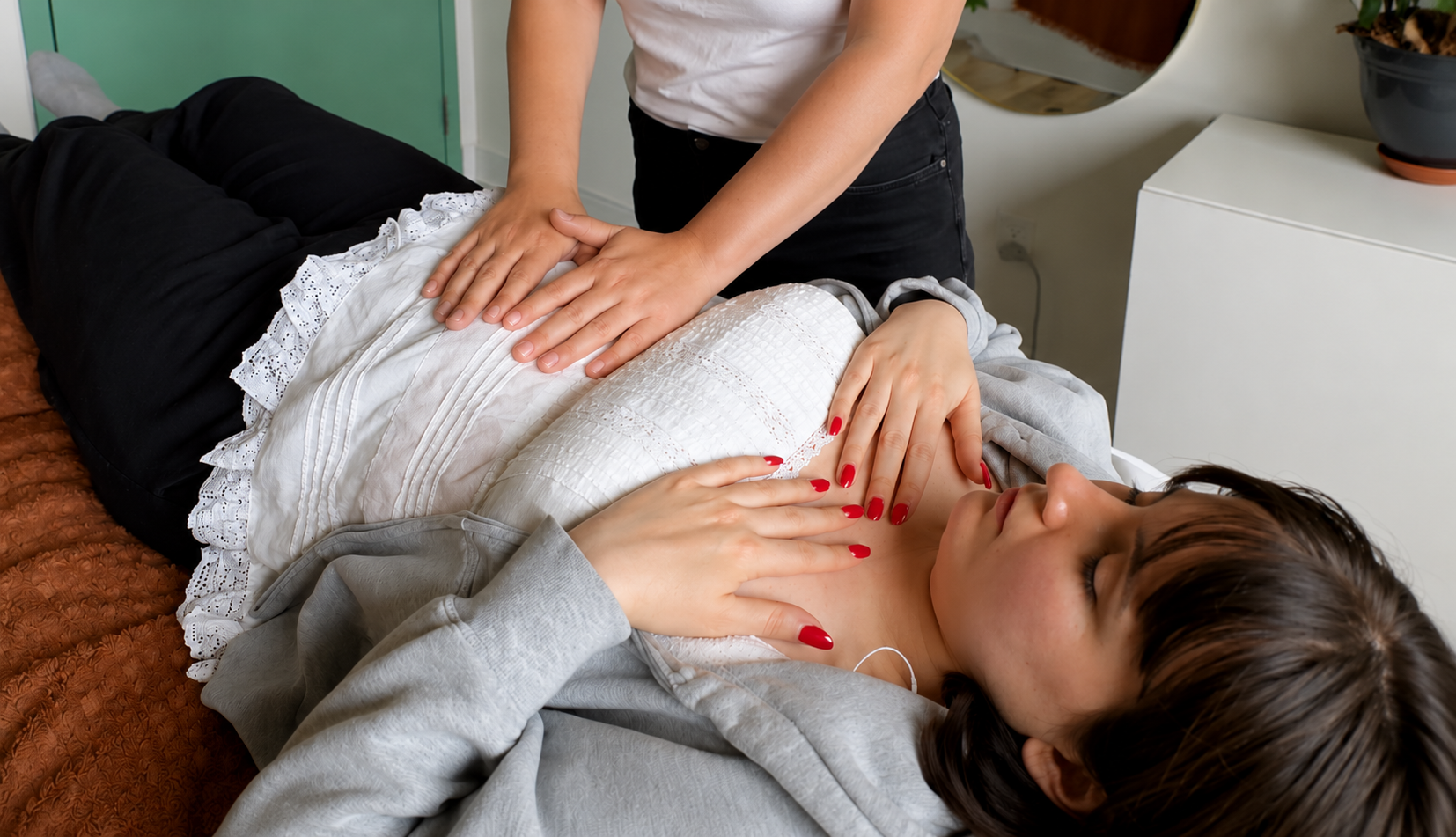
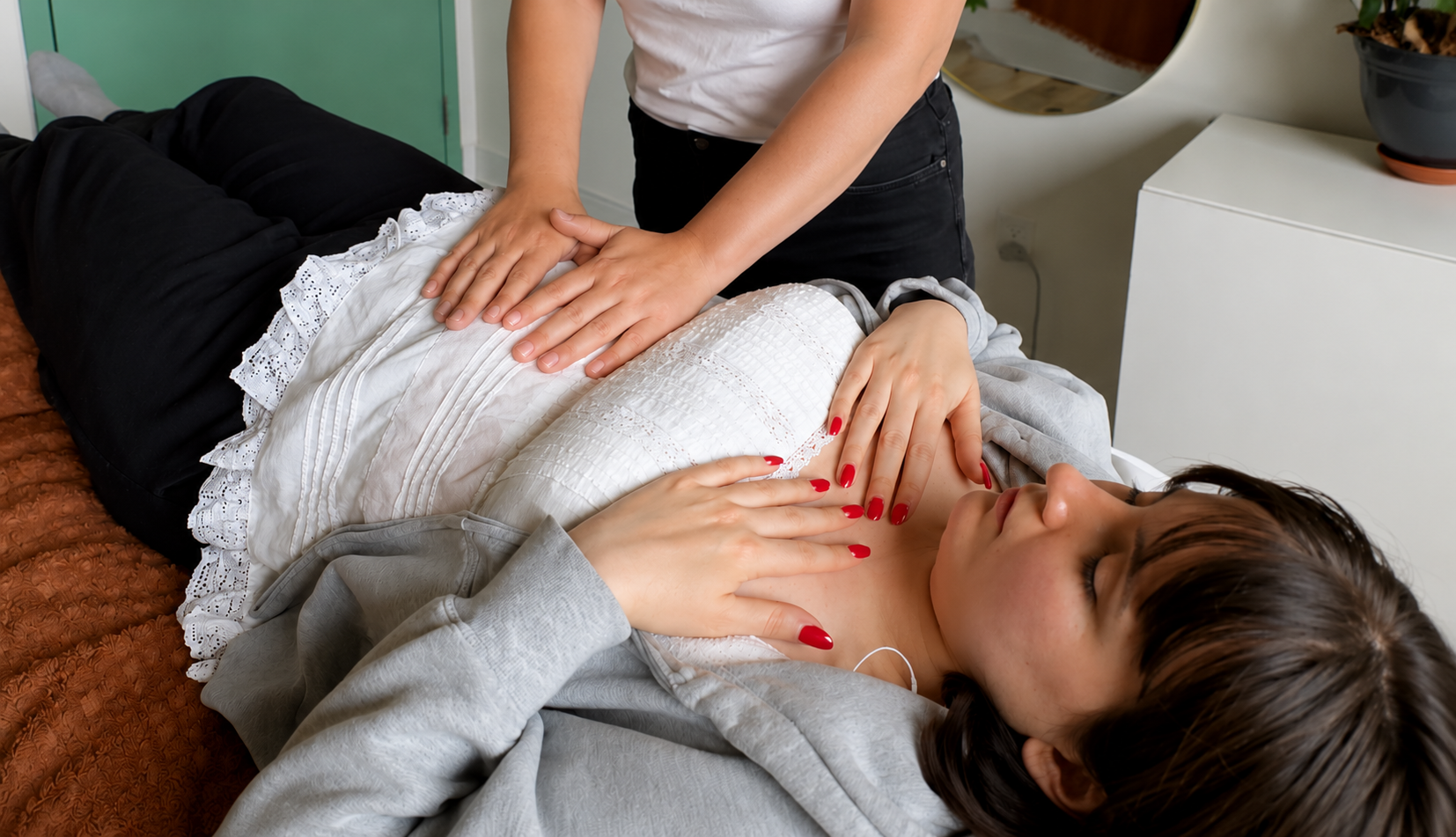
Lie comfortably on your back on a flat surface (or in bed) with your knees bent and your head supported. If needed, place a pillow under your knees for added comfort.
Position your hands. Place one hand on your upper chest and the other just below your ribcage so you can feel your diaphragm move as you breathe.
Inhale slowly through your nose. Allow your stomach to rise as you breathe in, lifting the hand below your ribcage while keeping the hand on your chest as still as possible.
Exhale slowly through pursed lips. Gently tighten your abdominal muscles as your stomach falls, allowing the hand below your ribcage to lower while your upper chest remains relatively still.
If you have difficulty with diaphragmatic breathing, don't sweat it! It's completely normal, most people typically use their chest to breathe. The diaphragm is a muscle, strengthening it will make it easier for you to pull oxygen in and out of your body. And with more practice, you can advance to implementing diaphragmatic breathing while sitting.
When would it be beneficial to use diaphragmatic breathing?
It would be beneficial to use if you are experiencing pain flare-ups, managing discomfort or attempting to reduce your stress. Because breathwork relaxes and calms the body, it allows you to think more clearly about how best to face and manage the situation ahead of you. It is important to note that while relaxing the body can be helpful when in pain or distress, it's more effective to use it before our bodies respond to stressors.
Whether you're preparing for a big presentation, navigating a busy workday, recovering from exercise, or simply winding down before bed, diaphragmatic breathing is a simple tool you can use almost anywhere.
Ready to Experience the Benefits of Breathwork?
Breathwork is a simple yet powerful tool that can help reduce stress, improve body awareness, and support your overall health. When combined with Registered Massage Therapy, it can help your body relax more deeply, ease muscle tension, and encourage a healthier, more balanced nervous system.
If you're looking for massage therapy in Toronto that takes a whole-body approach, Chris Atell, Registered Massage Therapist (RMT), incorporates breathwork and nervous system awareness into her treatments when appropriate. Whether you're managing chronic stress, recovering from an injury, dealing with persistent muscle tension, or simply looking to feel your best, Chris can help you develop strategies that extend the benefits of your massage beyond the treatment room.
Book your massage therapy appointment with Chris Atell at Toronto Community Massage & Wellness today and discover how breathwork can support your recovery, relaxation, and long-term wellness.